
The Future Client Does Not Exist
A closing essay exploring what comes next for brands, agencies and consumers as old models continue to dissolve.

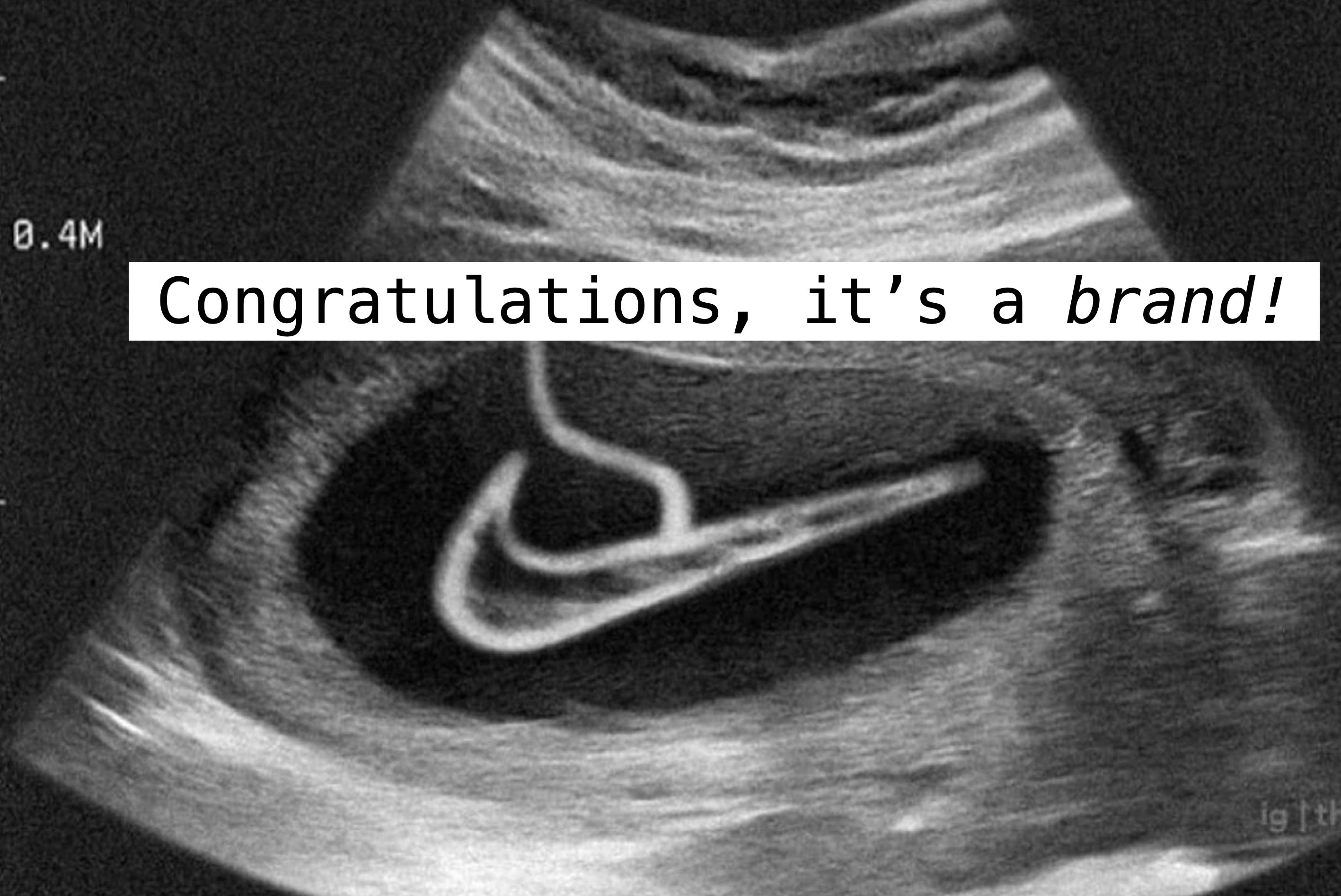
Before we dive headlong into the brand-agency-future stuff, I want to end the series by examining the most important question of all:
What is life?
A question I’m sure a lot of us have been asking ourselves recently. As we weep into our £280 shopping bill whilst placing the milk, bread and cheese it afforded us into an otherwise empty fridge. Or as hot beads of sweat roll down our backbone on our morning commute. Or while we’re chained to our desks in back-to-back-to-back meetings all day – unable to eat or pee. Or as we race another walker on the way home (do they know we’re racing them? They must know…? OMG they’re winning. Must. Walk. Faster). Or when we get home and crumple into a doomscrolling heap on the sofa. Or as we desperately try to get to sleep before our alarm pipes up to serenade another day of rush, rinse, repeat.
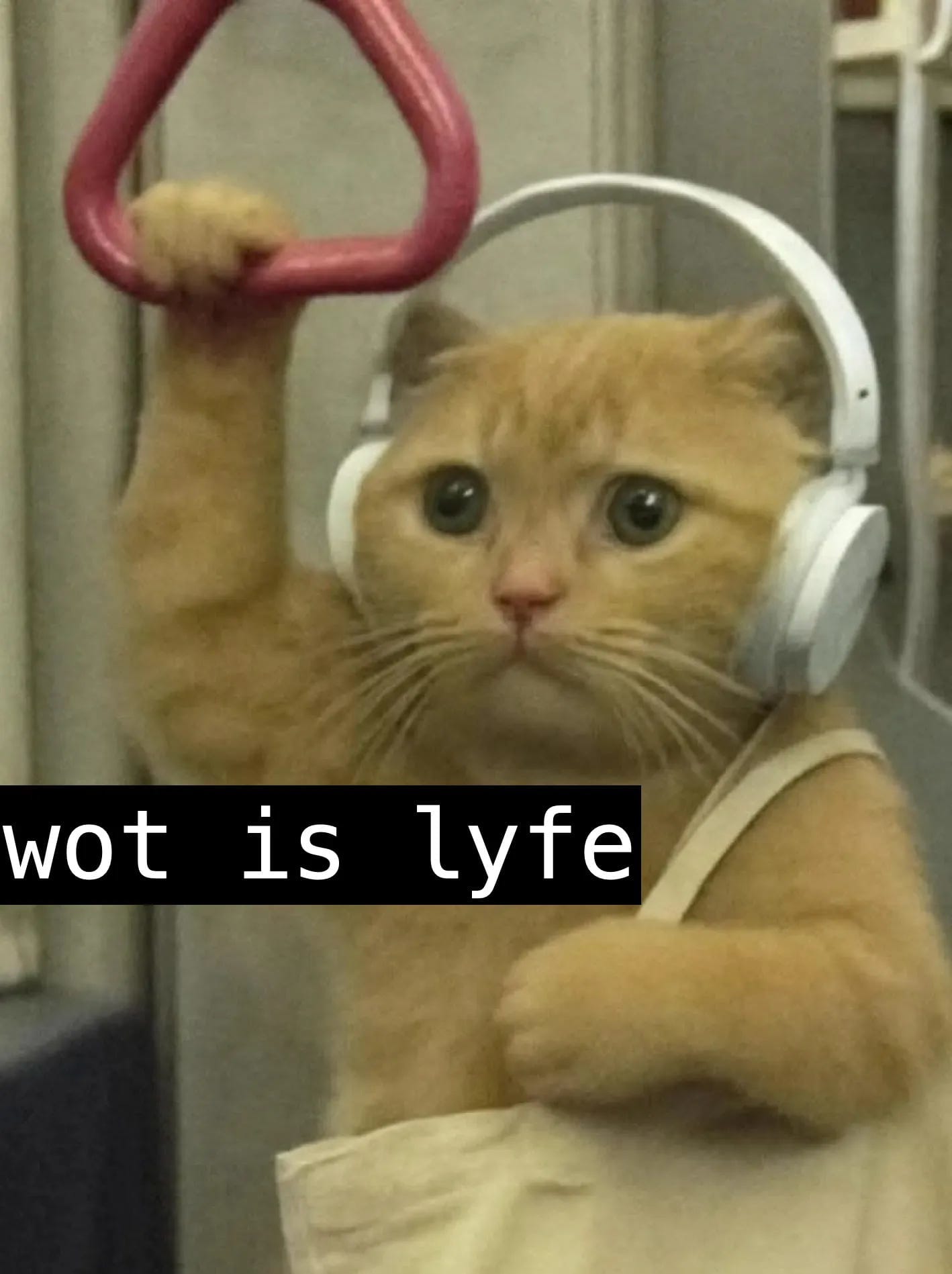
Exhausting, isn’t it?
But whose fault is it? Brands? But aren’t they reflecting culture? So is it… our fault then? Or is it the government? Or is it greed? Money hunger?
We can’t talk about what the future of brands is without first exploring the realities that “consumers”, a word doing more work than it lets on, and one we’ll spar with later, face.
The fix was never going to be better individual habits. Structural problems don’t get solved by individuals trying harder, they get solved by naming the structure out loud, then voting with our feet to change it.
So that’s what this last piece does: it is an honest look at why speed became the default setting in the first place, and what brands, agencies and all of us might do instead - in pursuit of my favourite thing of all:
A bit of balance.
This is the last article in a seven-part series produced in collaboration with Post-Culture by Sibling Studio, drawing on original research from 30+ senior voices across some of the world’s most respected brands and agencies.
WHY IS EVERYONE MOVING SO FAST?
Before we flip this to a positive, it’s worth asking why speed became the default in the first place, starting with a quote from Lewis Carroll’s Through the Looking-Glass – which does an eerily good job of visualising the absurdity of ‘speed culture’:
“Well, in our country,” said Alice, still panting a little, “you’d generally get to somewhere else — if you ran very fast for a long time, as we’ve been doing.”
“A slow sort of country!” said the Queen. “Now, here, you see, it takes all the running you can do, to keep in the same place.”
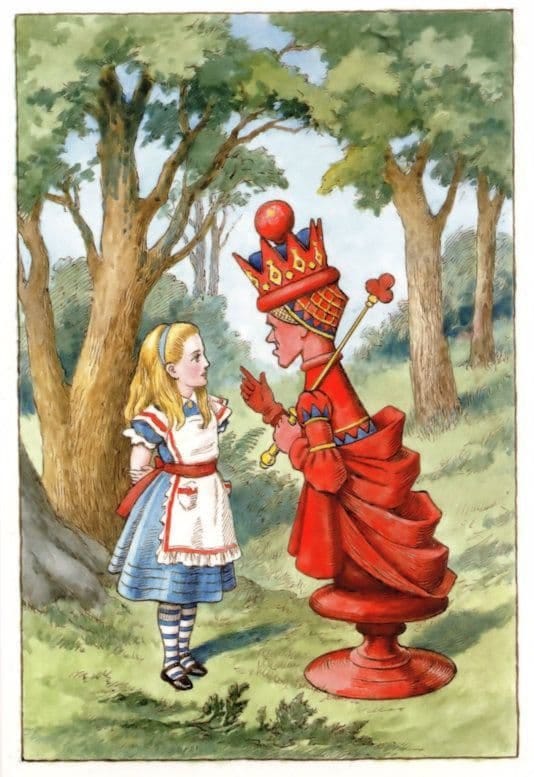
We’re all, collectively, exhausted. Peddling as fast as we can, but getting just about nowhere. And in some cases (uh-hum) going backwards. But why do we all feel this way? Let’s explore what’s driving it economically, culturally, socially, politically and personally…
Economically, We report earnings every three months, a clock that has nothing to do with how long real work actually takes. Marketing goes first when the number dips. It's the Red Queen's race: run flat out just to stay in place, except here, standing still gets you cut. No wonder there's no room left to fail, learn, or grow into anything real.
Culturally, The algorithm rewards frequency over depth. It punishes silence and the unfamiliar. Presence is a tax levied on absence. Nobody has time to make something original before the next post is due, so they remake what worked last time, and culture converges a little further toward the median with each cycle. Kyle Chayka calls the result a "pervasive sense of sameness" in Filterworld: How Algorithms Make Everything the Same, not an accident of taste but the direct output of optimising for reach at the speed platforms demand.
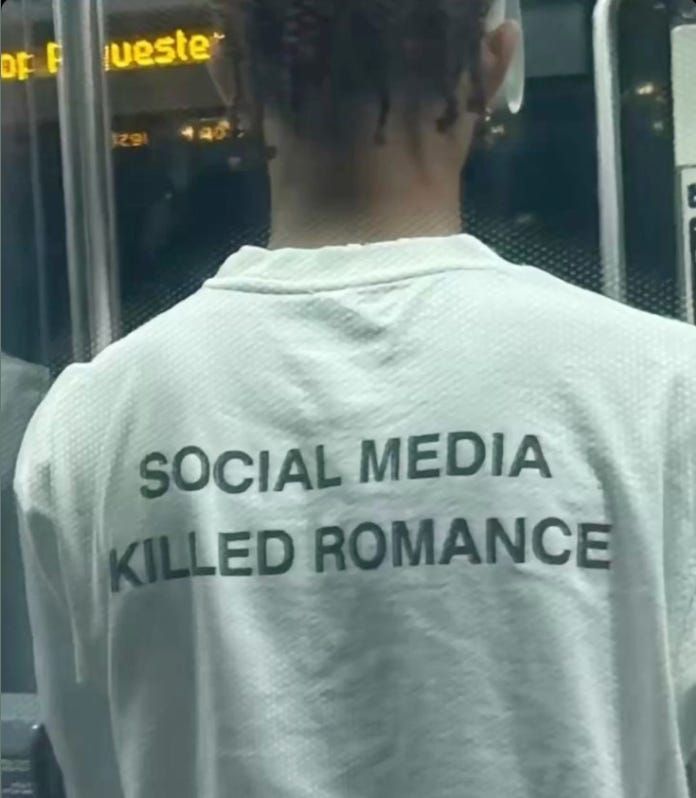
Occasionally, though, and we've all seen it, an idea is so bright, so true and so original that it cuts through anyway. The ideas that are laced with human truth over digital obedience. This sort of work, from algorithmic anarchists, have become rare jewels.
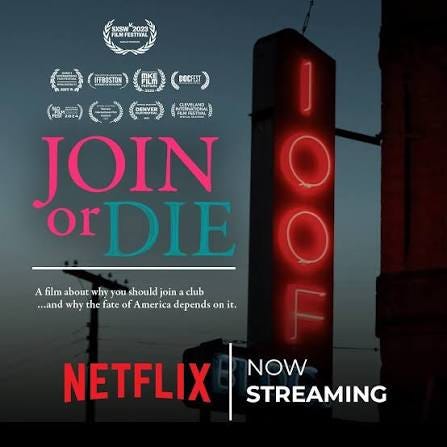
Socially, we’ve been quietly running down what the Harvard political scientist Robert Putnam calls 'social capital', explored in his documentary Join or Die (a must watch): trust and mutual obligation only build when people show up to the same room, with the same people, on a regular basis. The union meeting. The youth hall. The local pub. Extended family living in close proximity. The weekly congregation. Slow by design, built on repeated contact, not reach. What's replaced them runs on scale instead, and scale doesn't ask you to know anyone. It only asks to be seen. Then money became the church, work became the congregation. Et voila! Sh*t sandwich.
Politically, the ground itself is unstable. Wars fought over resources and a growth-at-all-costs economy. Climate pressure with dissolving accountability, created by the same demand. The US administration reshaping trade and certainty on a near-weekly basis. Capitalism, the operating system underneath all of it, showing the first signs of collapsing. A global pandemic. AI anxiety. A cost of living crisis. It’s no wonder we’ve entered our Count Binface-era. Because if you can’t laugh…

And personally, as a result of all this, people spend most of their days in fight-or-flight, a state that quite literally makes the heart beat faster so it can pump blood at speed around the body, ready to run from danger. We’ve traded privacy, data and attention for convenience. And autonomy of thought, the ability to form a view before someone else supplies one, for doomscrolling and dopamine hits.
Not the best conditions, I hope you’ll agree.
THE POWER TO CHANGE
OK, so that’s the backdrop. And it’s pretty bleak. We can’t lie. So let’s pause for something a bit more positive before we try and figure out what to do about it.
There is no question that the hunger for change is there. And if money equals power, and the Creative Economy is worth $2.25 trillion a year globally1 – that make us pretty powerful. But before we can be powerful we have to feel powerful. So let’s switch the mood by sharing some of the creative-economy-life-affirming quotes from the 30+ brand and agency contributors. Because nowhere painted a more inspiring, honest or optimistic view of the creative industry’s potential future than the answers in this research.
“What came back wasn’t a tidy set of industry opinions. It was something closer to a collective exhale.” – Article 1
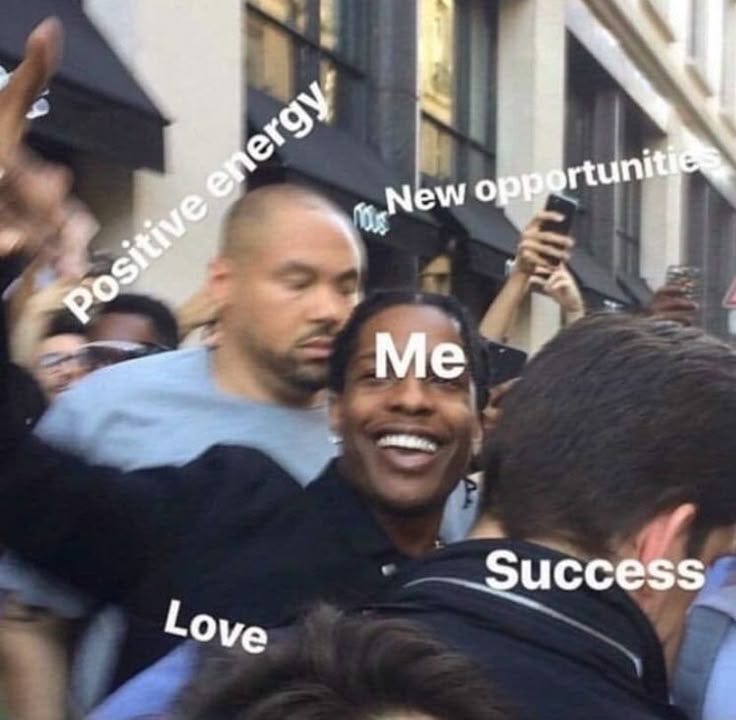
Let’s remind ourselves of some of the best, most uplifting responses:
Starting with belief, because if we believe we can change things, we will. A fact proven by Harvard researchers. “Belief at the right moment changes everything,” says Lesley Winterbach, Founder of The GOODList. “We wouldn’t be what we are without it.” Liam Gleeson, Founder of HIDDEN Agency and hi-fi.london, describes what that belief actually produces when extended, it makes them want to: “run through walls.” Belief builds momentum.
Damola Oladapo, Founder of House Captain, refuses to let any of this curdle into cynicism: “Brands need inspiration, and agencies are full of people living in cultural half-spaces with the reference points to deliver it. […] Inspire, man!” And Lily Fletcher, MD at Broadwick Studio, described the need for: “relentless belief in the power of human ingenuity.”
Even the hope in this research comes with its sleeves rolled up. “We hope there continues to be folks out there that value the time it takes to develop something truly great,” says Alex Tan, Partner Strategy Director at Mouthwash Studio, which is less a wish than a dare.
Luke Li, Global Creative Lead at IKEA, goes further still: caution might be everywhere right now, but that’s exactly what makes this the moment to stand out. “Historically […] this kind of period often creates opportunity. It’s usually the brands that stay consistent, clear, and willing to push boundaries that manage to stand out.” Isobel Farmiloe, Global Head of Strategy & Growth at Dazed Studio, is excited by “the rapidly changing agency landscape, the need to […] take a different approach”. Basking in the middle ground, creating mid work is the only genuinely risky option remaining.
None of this is optimism is naivety. It’s thirty-odd senior people, inside the same bleak backdrop as everyone else, choosing to answer a research questionnaire about the future with belief, hope and inspiration rather than resignation.
Because if anyone can come up with a creative solution to the myriad of problems we face, it’s got to be the creative industry… right?
SYMBIOTIC FUTURES
But before we can fix things, we need to fix the client-agency relationship. Which was the centrifugal force of this series. And, incidentally, the centrifugal force of the creative industry’s ability to make good work.
And our contributors made clear that the client-agency relationship only works when it moves past supplier-and-buyer into something symbiotic.
Andy Harvey put it clearly: “We became integral to each other’s worlds to the point where client/agency dissolved. The best relationships are force multipliers, both sides making something bigger than either could alone.” Frida Hedqvist asked the question underneath it I keep circling back to: “How do we create more human connection and structure inside increasingly complex systems?”
The worst stories show the opposite, from both directions. Andy Harvey again, on what breaks it: “The worst relationships come down to a lack of trust. Fear is the mind killer.” Mark Carroll, on hostility replacing collaboration: “The most toxic dynamic I encountered was a client actively hunting for problems.” And one client, speaking anonymously, on what ends things for good: “Drowned in meetings, emails and workflow. Promised the world then blindsided on execution.”
Trust breaking, hostility replacing collaboration, promises outrunning delivery, are all different roads to the same place: two sides that stopped shaping each other. Unable to shape good work.
There’s a strange, literal picture of what working symbiosis actually looks like. Physicists at the University of Ottawa recently photographed two entangled particles in real time, bound to each other regardless of distance, a change in one showing up instantly in the other.
The particles formed a yin-yang.
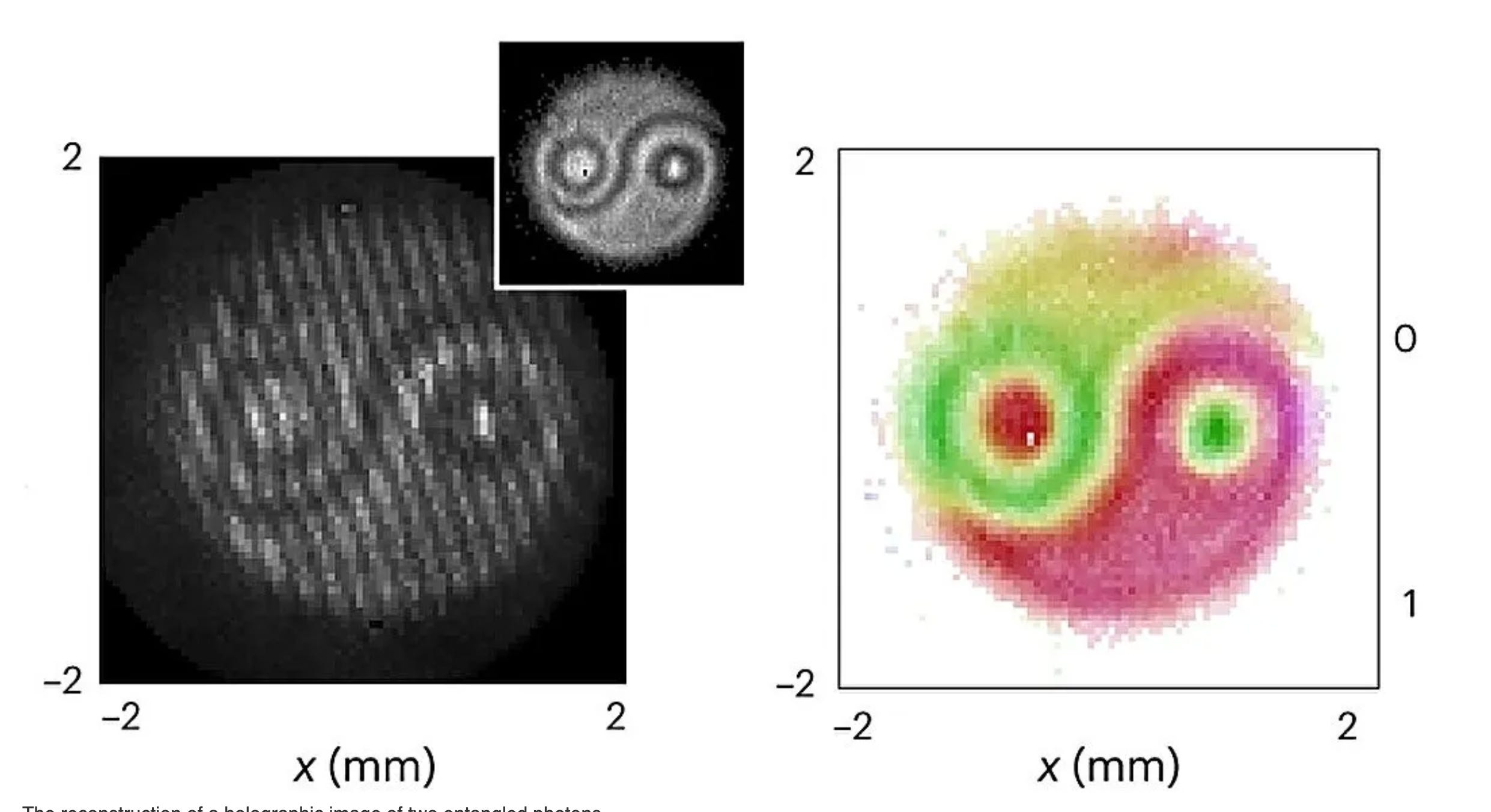
That’s the underlying rally cry of this whole research project: for the boundary between agency and brand to stop being so carefully defended, and start being treated as the place the real value was hiding all along.
CAPITALISM GOT IT ALL WRONG
Now to spar with capitalism. Because we’ve been mis-sold its competitive backbone.
Darwin published On the Origin of Species into a colonial, capitalist world that wanted nature to confirm what it already believed: that competition wins. So when a phrase came along that flattered that worldview, "survival of the fittest", it stuck, and got quietly attributed to Darwin himself. It wasn't his. As Rowan Hooper, editor at The New Scientist, writes in Togetherness, it belonged to Herbert Spencer, a crude paraphrase that suited that audience rather better than it suited the actual biology.
What that audience conveniently skipped past was Darwin's own closing image in the book, not a battlefield, but "an entangled bank," dependent forms tangled together, each needing the others to survive. Capitalism built an entire philosophy on the competitive half of that picture, and left cooperation out of the brochure.
Cooperation, in Hooper’s telling, only works at close range: a bee can’t pollinate a flower it’s never touched. Competition is what happens once you stop seeing the other thing as specific and alive, and start treating it as a resource. Which is a misinformed way to build an economy, always looking over your shoulder, permanently in fight-or-flight.
Most brand strategy right now is really just safety-seeking in response to that fear, chasing the quarterly number because it’s the one thing that can be measured this month. Agencies now run on that exact same three month rhythm too, retainers, contracts, review cycles, and new quarterly filings to HMRC under Tax Made Digital.
Governments run on the same short-termism too, a four-to-five-year electoral clock, and nobody wants to fund something good enough that their opponent gets to cut the ribbon on it. So public funding for arts and culture keeps shrinking.

But here’s the more hopeful version of what happens next: the brands with the greatest cultural influence in the next decade won’t just showcase culture, they’ll provide the conditions for it to exist in the first place, a shift Lucinda Bounsall has been exploring in her own writing.
That’s not brands quietly picking up a government’s bill. That’s brands doing something governments structurally can’t: funding what won’t pay off before the next election, because they’re not waiting on one. But also, lowkey don’t get me started on how much tax we pay and how little community and cultural infrastructure the government provides direct.
But… that’s good news for brands doing it for the right reasons and not merely looking to “commercialise culture even further”, as Lucinda Bounsall puts it.
Time will tell which one wins out.
THE GROWTH AXIS
Capitalism's competitive backbone doesn't just shape how brands treat culture. It shapes what they think growth even means.
There is a global misconception that growth means “getting bigger” alone.
Growth sits on two axes, not one: bigger or smaller, richer or poorer. Conventional wisdom treats them as the same line. They’re not. You can get poorer by getting bigger, more headcount, thinner margins, less distinctive work. You can get richer by getting smaller, the specialist who turns down volume to protect focus - worth more per client than the agency ten times its size.
Most of the industry is optimising for the wrong quadrant.
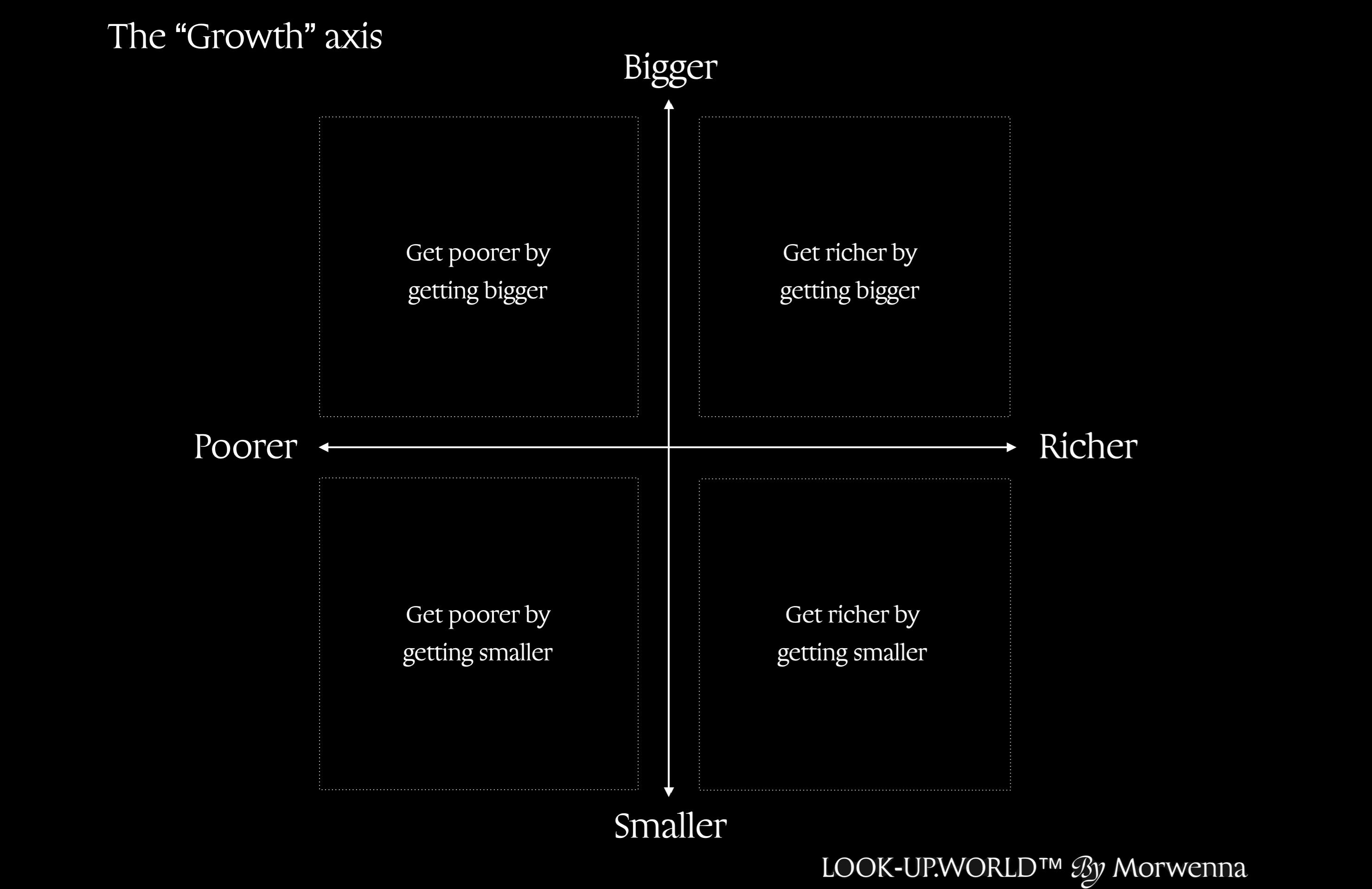
A business genuinely fighting for survival has every right to chase the quick win. The problem is what happens after survival is secured, when nobody checks whether the habits that kept you alive are the same ones now stunting you.
Our ingrained urge to constantly chase “bigger”, “faster” doesn’t produce real growth. It's growth on steroids, or the water pumped into mass-produced meat to inflate its sale weight, bigger on the scale, no more nourishing, and it won't hold up over time.
My own growth practice was built on the other ordering: purpose before profit, not idealism, but sequencing. The businesses built to last are the ones that worked out what they were for before they worked out how to monetise it.
Because consumers (aka humans) that are buying your product want to belong, not simply to be extracted from. They want product that gets better over time. Not just better profits.
Real growth never comes from the safe, guaranteed win. It comes from the harder decision to build what humans actually need, and the patience to picture what that could become before rushing to sell it. Which is really symbiosis again: doing less, well, and having the headspace to be original.
It’s an economic and entrepreneurial, but deeply social, case for balancing fast with slow.
IT’S ABOUT BALANCE ⚖️
On the topic of fast and slow: there’s a version of this argument that says speed is simply the enemy, and slowness the cure. That’s not quite right either.
Ed Catmull, in Creativity, Inc., records American film director Brad Bird making the real case: a healthy creative culture needs its storms as much as its sunny days. "You need all the seasons." Balance was never stillness, it's dynamic, closer to a surfer catching a wave, and it only works when every part of an organisation is allowed to push against every other part, without any one winning outright.
The physics from earlier makes the same case differently. Those entangled particles didn’t form a yin-yang because someone wanted it to look poetic, that’s what the measurement produced: two opposite states, inseparable, each incomplete without the other.
Fast and slow were never opponents. They’re states to be balanced. The moment one dominates, finance, marketing, speed itself, the system loses its balance, not because conflict appeared, but because it stopped being shared.
Balance isn’t the easy option it gets mistaken for. Work-life balance has been quietly recast, across this industry, as something for the lazy, and that’s possibly the worst fiction the industry has told itself. The person who’s actually achieved it isn’t coasting. They’re mastering one of the most complex systems there is to work inside.
So here’s the invitation, aimed at clients specifically: budget for slow, deliberately, the way you’d budget for anything else you consider necessary. Not delay. Not a nice-to-have once the urgent work is done.
Portion a genuine allocation, spend and time set aside for work with no immediate deliverable, where the value is in what gets discovered, not what gets shipped. Because if we’re too heads-down to ever look up, nothing new gets born.
We just keep reproducing the same present, over and over, and calling it the future.
HUMANS NOT CONSUMERS
“Consumers” is a word I promised I’d reckon with. And now’s the time.
We don’t call a cow a cow on the packaging. We call it beef. Pork, not pig. The word changes so the animal doesn’t have to be pictured, so the extraction doesn’t have to be felt. The creative industry does the same thing. Not “people.” Not “humans.” “Consumers.” Worse, “target audience”, a category, not a person, with a target on their head, sized by spend rather than anything that makes them human.
We’ve spent decades giving brands birth stories. A “voice.” Values. A purpose. We’ve fine-tuned them into psychological archetypes: the Hero, the Sage. Every workshop or rebrand comes with the same instruction: be more human.
Often, it’s more than we afford the humans at the end of the supply chain.
This is the quiet trick running underneath everything else in this piece. Quarterly reporting works easier on a category than a person. Algorithmic strategies are easier to justify to data than to a person. Growth-at-all-costs is only survivable if the thing you’re growing at the cost of isn’t a person either.
Naming the human is the whole shift. Putting them back at the centre of everything is what that actually looks like in practice. Humans are a brand’s purpose. The brands that serve them, genuinely, will capitalise. Purpose before profits. Cooperation over individualistic “survival of the fittest” is the deeper logic underneath it.
If we name the human, every system blocking our humanity gets a little trickier to defend.
TO END.
Nobody’s the villain here.
Agencies sell short-termism because clients buy it, and clients buy it because consumers consume it. But if everyone is optimising for right now, nobody’s actually imagining what’s next, and if we stay on this track, we won’t be creating the future. We’ll be a victim of it.
That’s not doom, though. It’s opportunity. If almost nobody’s doing something, whoever does gets the whole white space to themselves. It’s been right in front of us the whole time. We just have to look up and see it.
And the centre of all this research remains the same as it’s always been: humans. So let’s put humans back at the centre of everything we do. That’s the calling.
Shanice Mears, Founder of The Elephant Room, asked a version of this question – aimed at agencies: what does your ideal agency of 2030 look like? Nobody’s fully answered it yet, because the question is dependant on us answering another one first:
What does the ideal brand of 2030 look like?
And how to birth it?
That’s up to you.
Because (saying it louder for those at the back) if anyone can come up with a creative solution to the myriad of problems we face, it’s got to be the creative industry… right?
WHERE TO START
Right. Diagnosis is done. Here’s where eight brands could actually start, today. Everything on this list gives a brand the genetic wherewithal to survive what’s coming, built for togetherness instead of extraction.
Answer these for yourselves, or agencies, put these to a brand with the above in mind:
1 – Budget for longevity.
Most brands budget for speed without a second thought. Almost none of them budget, meaningfully, for its opposite: longevity. Balance fast with slow. Set a portion of your budget aside for longer play initiatives. Experiment, play. The fastest way to growth is to make mistakes. Then learn from them and come back sharper.
2 – Turn bad habits into good habitats.
Talk openly about the pressures keeping you up at night, the world, the money, the fear. Then make a pact to go out and make good work with your agency anyway. Make a list of “to-don’t” so you have a clear list of “to-dos”.
3 – Focus on memorability and trust (over algorithmic slush).
The algorithm rewards frequency and sameness over depth and originality. Following it obediently gets you seen, not respected or remembered. The work that actually cuts through is usually the work that never asked the algorithm’s permission in the first place. It was so good humans picked it up naturally.
4 – Rebuild real, repeated contact.
We’ve replaced the union meeting, the local pub, the weekly congregation with scale instead of proximity, and scale doesn’t ask you to know anyone. Find whatever your version of showing up to the same room, with the same people, actually is. Do it regularly.
5 – Ask the question out loud, in the room.
Most brands never actually sit down and have the conversation about what they want the next ten years to look like. That silence is the gap this whole piece has been pointing towards. Whoever asks first gets the white space to themselves.
6 – Don’t call us consumers.
Call us humans. Nobody looks after a category. People only get looked after when they’re seen as people. Ask the hard questions: are we treating actual humans, staff, customers, the people this product touches, as well as we treat the brand's imaginary personality? Less tone-of-voice more mode-of-being.
7 – Remember growth sits on two axes, not one.
Bigger isn’t always better. The specialist who stays focused can be worth more per client than the brand or agency ten times its size.
8 – Symbiosis, not competition.
The best relationships in this research were the ones where client and agency stopped being separate things and started being one system, each shaping the other. Cooperation isn’t a nice sentiment. It’s the actual mechanism, in nature and in business. Everything else on this list is really just this one, said a different way.
That’s the now. Here’s the next…
What’s next?
If there’s enough hunger for it, I’ll follow up with a “FUTURES” workshop format, loaded with the kind of questions built to be answered together, not alone, so brands and agencies can actually co-author what comes next rather than guess at it separately.
Let me know if you’d want it in the comments, and I’ll dm it once it’s ready. Or just tell me what you think of all this, agree, disagree, whatever, I’d love to hear it. 🌍
Work with Morwenna
Hi I’m Morwenna. A Growth Partner to creative businesses with 20yrs experience. If you like my writing, here’s how we could work together:
Growth coaching, mentorship and consultancy
Vision for growth (strategic blueprint)
Path to growth (executing the vision)
Keep Reading
The Brief is Downstream of the Problem

A few months ago, Lucinda Bounsall at Post-Culture by Sibling Studio and I sent a questionnaire to some of the people we most respect in the creative industry. Founders, strategists, brand leaders, agency heads. We asked them to be honest about what’s working in the client-agency relationship and what isn’t. What came back wasn’t a tidy set of industry opinions. It was somethi…
Nobody Designed the Process

Think about the last time a creative project felt smooth. Where the brief was water-tight upfront, consolidated feedback arrived early, freelancers were put to full use, invoices were paid on time and the creative output outdid the concept.
Thanks MA-HOOSIVE final thanks to our out of this world contributors:
Frida Hedqvist (IKEA), Alex Tan (MOUTHWASH Studio), Nav Gill (Nike), Nikita Walia (U.N.N.A.M.E.D.), Joel Linkewer (AIRBNB), Isobel Farmiloe (DAZED), Thomas Kirkby-Jones (BREAKS), Mark Carroll (PINTEREST), Andy Harvey (COMMUNION), Mo White (REFY), Damola Oladapo (House Captain), Annie Masciavè (VINTED), Dani Coyle (Intersexy), Luke Li (IKEA), Liam S.Gleeson (HIDDEN and Hi-fi.london), Susie O’Brien (adidas), Lily Fletcher (Broadwick Studios), Lesley Winterbach (The GOODList), Paul Austin (Made Thought), Shanice Mears FRSA (The Elephant Room), Laura Conway (Creative Blood), Ana L, and Munise Can (Highsnobiety).
And a few who wanted to stay anonymous ;)
And special thanks to Lucinda Bounsall of Post-Culture by Sibling Studio – who the series was written in collaboration with. And thanks to me for managing despite it all to consistently post for 7 weeks in a row. It’s been a pleasure. If you enjoyed it support more where this came from by subscribing. 🌹
Subscribe to LOOK-UP.WORLD™, By Morwenna
For 20 years, Morwenna has watched what separates creative businesses that take off from ones that plateau. LOOK-UP.WORLD™ is taking those insights public.
UNCTAD, Creative Economy Outlook (United Nations Conference on Trade and Development).
Loved this, especially the part about consumers being a word doing more work than it lets on.