
Nobody Designed the Process
How modern creative work has outgrown its own process, and why pace, feedback loops and collaboration are breaking down on both sides.

Think about the last time a creative project felt smooth. Where the brief was water-tight upfront, consolidated feedback arrived early, freelancers were put to full use, invoices were paid on time and the creative output outdid the concept.
If you’re struggling to remember one, that’s the point.
The reality is agencies are drowning in revision loops that a single earlier conversation would have prevented, whilst chasing invoices overdue by 90 days. Clients are absorbing the chaos of a relationship that was never properly set up, whilst watching the budget disappear into process over output.
That tension isn’t personal or malicious. It’s structural. And it’s eating away at our ability to make great work. But the answer to difficult human relationships isn’t to remove the humans. It’s to build systems within which we (and our creativity) can flourish.
What’s to come isn’t an argument for frictionless work. World-class creativity requires world-class human chaos. But chaos in the right places. What the contributors to this research describe is a different category of friction entirely - the kind that produces nothing. The kind that burns away at the conditions that make great work possible.
Today we explore those road blocks, and what might happen if we designed the process so that all of that energy went into the work itself. Wouldn’t that be nice?
This is the third article in a seven-part series produced in collaboration with Post-Culture by Sibling Studio. The insights below are drawn from original research gathered from 30+ senior voices from some of the world’s most respected brands and agencies.
What emerged from this research was a yearning for relationships where the process is designed collaboratively from the start - and a recognition that, somewhere along the line, the simple question ‘how do you like to work’ got lost. What exists instead is a set of habits that have been inherited, unexamined and (more often than not) incompatible.
Frida Hedqvist, who consults on Innovation at IKEA, put it well: “I don’t expect agencies to solve everything upfront, but I do expect them to shape a framework that can hold ambiguity.” A framework that can hold ambiguity is not a request for a perfect process. It’s a request for a malleable, shared one.
Instead, agencies arrive with their process, clients arrive with theirs, and rigidity sets in from the get-go. Two operating systems, two Asana, Monday.com or Frame.io accounts – not interacting, not checked for compatibility. Alongside an assumption on both sides that the way you like to work is the way this will work.
So how can we align client-agency processes so they’re more compatible?
Start with the first structural fault line - because it’s the one that hits before anything else has a chance to work. Pace.

A contradiction we heard a lot, from agencies and brands alike, was the idea of pace. Who could keep up, and who couldn't. Our research uncovered that the shift away from the slower-moving network model was happening on both sides. Up to now it's mostly been agencies pushing slow-moving brands to keep up. Now, it appears the tides are turning.
Mo White, CEO of Refy Beauty, raised a point that needs airing: agencies often underestimate how fast decisions are made and how hard it is to keep them in the loop. “An agency has to be as smart, fast and agile as the company they are working with and lean into the imperfect processes instead of resisting them.” That last part is the uncomfortable ask.
The agency that holds out for a clean process is waiting for something that may never arrive. The one that learns to work inside imperfect conditions, without losing quality, is the one worth keeping.
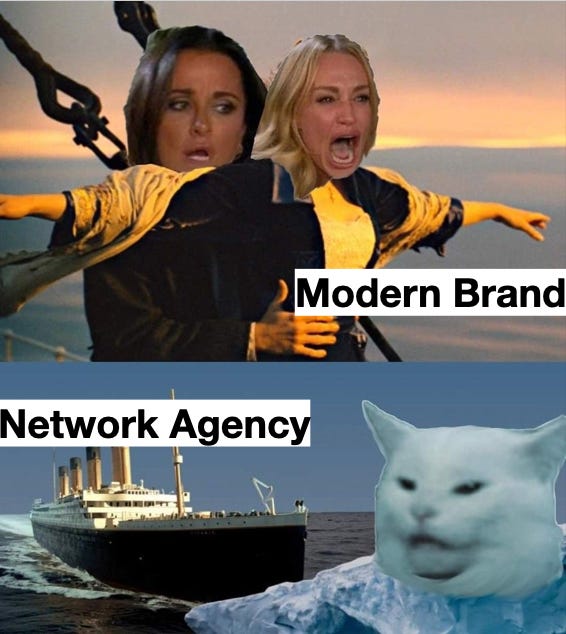
But there is a version of this story that more agile, independent agencies rarely tell themselves. The assumption that a brand will be slow is often borrowed from experience with network clients (who were used to working with network agencies) - global holding companies with seventeen sign-off layers and procurement processes that take longer than the project. That history is real, but it isn’t universal.
What if the person who needs to “keep up” was the independent agency? How would that realisation change the way they responded to in-project changes. Some brands have built their entire advantage around speed. When an agency arrives assuming slowness that isn’t there, the misread creates its own friction before a single brief has landed.
But this works both ways. Genuinely slower, network brands need to make changes internally before working with more agile studios who can out-pace slower, network agencies. Because that’s what you’re paying them for.
Laura Conway, Founder of Creative Blood, named what happens when the assumption runs the other way: “Bigger organisations - brands and large agencies - bringing independent partners in wanting their creative and cultural capital, but not recognising their own slow nature of decision-making and money constraints. It drains the agile capabilities and energy of the indie spirit.”
Dani Coyle, Founder and Creative Director at Intersexy Studio, describes the best clients “pay 50% upfront quickly, so the work can receive 100% of the creative focus.” Ultimately, expecting agile agencies to supply agility then pay them in 90 days isn’t going to work. That’s an overhang from the network era. As the model changes, prehistoric cash-flow strategies need to change with it. Brands who want agility need to pay with agility.
The pace mismatch isn’t one-directional. It’s a vice that tightens from both ends. And it almost always goes unnamed. If you think your brand set up is more agile than the agency, tell them. And vice versa. Uncover the pinch-points. Then work out a new way forward together. Because evolution is only possible when both sides hold themselves to account.
And then there’s what happened in 2020, which most people have quietly accepted as permanent.
The in-person kickoff is the most underrated casualty of the pandemic. Not because it was a nice ritual, but because it was doing real structural work that Zoom was never going to replicate. The research is unambiguous: in-person settings produce better creative thinking and stronger relationships. We knew this before 2020. We just stopped acting on it. A Stanford and Columbia study found in-person meetings resulted in 20% more ideas1. And more original ones at that.
Lil Fletcher, MD at Broadwick Studios, said it directly: “2020 killed in-person kick-offs, and projects are weaker for it. Invest in getting your agency in the room with you and treat them like customers you want to fall in love with the brand.” Relationship maintenance is part of the production cost. Cutting it is a false economy. That’s not to say 5 days in the office is the way either. But factoring in IRL time saves relationships. And relationships save the work.
Gallup, whose workplace research spans millions of employees globally, is consistent on this: meaningful human connection at work reduces burnout, increases engagement and creates a sense of purpose2. And human connection, it turns out, requires human contact. It cannot be built asynchronously on Slack.
Another thing that came up again and again was the element of surprise. Surprise feedback; surprise creative outcome; surprise costs and surprise delays. And, beyond craving more in-person time, there was a clear hunger for consistent, honest communication throughout.
The black box model (where an agency takes the brief, disappears, and returns to present) is one of the most persistently adopted habits in the industry. It feels professional. It respects the creative process. It gives the team space to think. And it is, in practice, one of the most reliable ways to generate an unpleasant reveal. According to clients.
Frida Hedqvist explains: “if we don’t collaborate throughout the process, the agency won’t fully understand the company, and the company won’t be challenged in the right way either. The black box can easily become an awful surprise box.” An awful surprise box is not a metaphor for mild disappointment. It’s the experience of having invested time, budget and goodwill into a process that was sequential rather than collaborative - and arriving at a reveal that has come too late to fix anything at a reasonable cost.
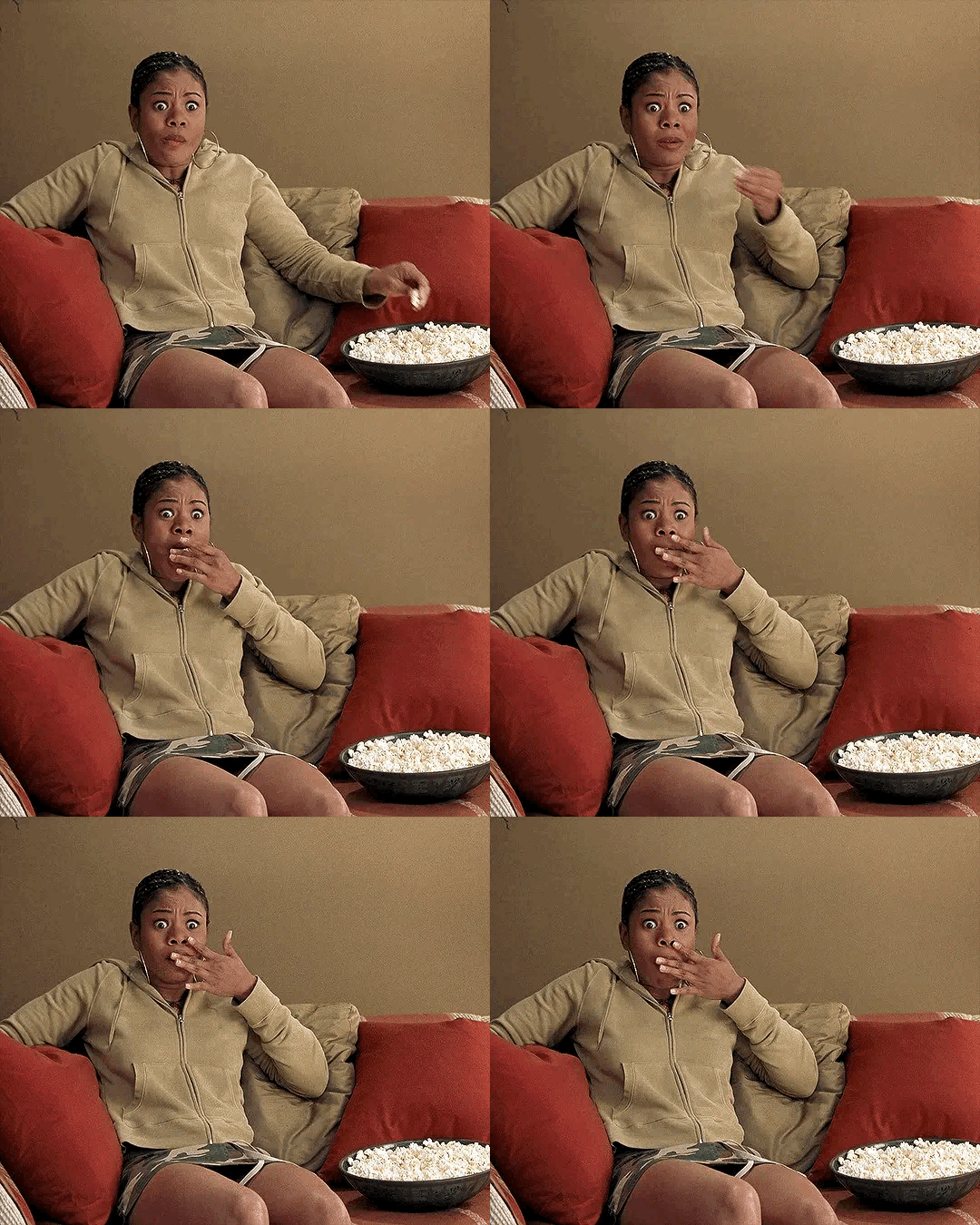
Which is what several contributors pointed to when they described wanting to see thinking earlier.
Agencies show up with polished decks because polished decks signal competence and justify fees. But in a world where polished decks are easier and easier to come by, what clients really want is evidence of clear human thinking. How did the brief land in your mind? What parts can't you stop thinking about? Which parts is your subconscious still working on? What early directions are you considering? That's what they're paying you for, over AI.
Chat to your clients about it. Bring them into your world. Let them see the cogs turning, like they let you see the cogs of their business at the factory visit. Tease the outcome to come. Run the process like a marketing campaign. Let them challenge you. Let them co-own the answer. Because when they do, they'll fight for it internally. And that's when the work actually gets made.
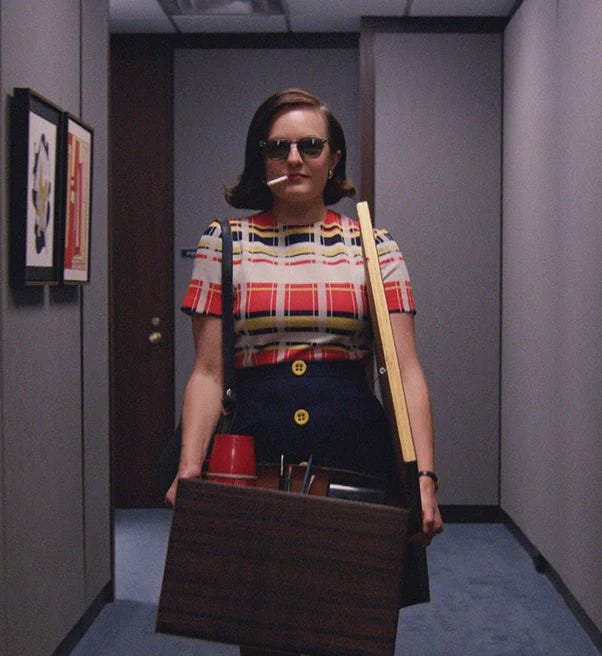
Susie O’Brien, Senior Art Director at Adidas, put the client-side preference simply: at the concepting stage, she and her team would rather see ideas more often and less polished, because moving efficiently matters more than arriving at a perfect visual. “As long as you can communicate your creative ideas and vision effectively, this is more important to us than seeing a polished and perfect visual.” That sentence should probably be printed and included in every agency onboarding pack.
Just like how we like seeing the messier, unpolished version of people’s lives on social, or you prefer the friend who is actually real and lets you into their unfiltered internal world, there is a growing yearning for unfiltered, unpolished work. Work that goes analog. Shows us a tag line on a napkin.
But p.s. you only get away with the napkin if the relationship is already there. If you've over-digitalised the relationship, you're likely to over-digitalise the output. Over-index on the in-person and the napkin just works.
All this connects back to something broader about feedback culture. As Ana Lapa, a designer we spoke to, explains: nobody really uses the quieter periods between active projects well. No pre-mortems. No post-mortems. No regular check-ins to catch misalignment before it calcifies. The consultation model that would make all of this easier doesn’t exist, because nobody designed it.
And so the closed feedback loop becomes the default. Polished presentation, considered response, no one saying what they actually think until it’s too late to act on it. The open one, where early and uncomfortable reactions are genuinely welcomed rather than managed, is the exception.
Bad feedback, delivered early, is a gift.
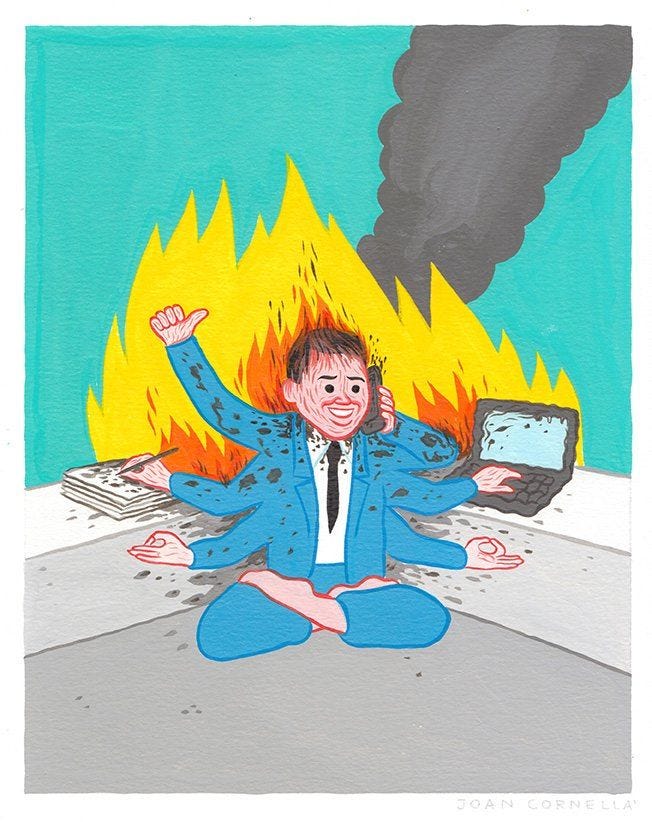
The absence of clear feedback and direction comes at a real, human cost. The industry tends to call it a workload problem, because workload is quantifiable and direction is not. But the accumulated cost of all that misdirected energy doesn’t just lead to inefficiency, it leads to burnout.
Ana Lapa, who has worked inside this system for long enough to name it precisely, identified the real mechanism: "Agency life has no shortage of people managing day-to-day, but fewer people genuinely holding a vision. I think a lot of what gets called burnout in creatives is actually just the feeling of working without one. It's not a workload problem. It's a direction problem."
Burnout treated as a workload problem gets addressed with lighter schedules and wellness benefits. Burnout treated as a direction problem requires something more fundamental: a reason to care. Add that to strong human relationships, and you're off.
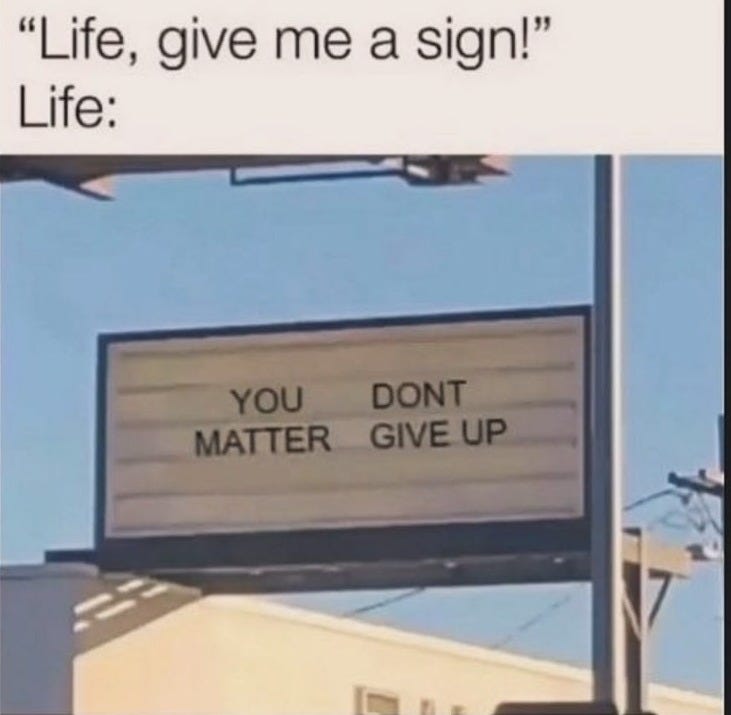
There is something else worth naming here, which is what happens at the halfway point of any project. When you are halfway through something, there is no dopamine left from starting and none yet from finishing. The work is half done and everything is in a state. It looks worse than it did at the beginning.
This is the moment when both sides are most likely to lose confidence, redirect, or introduce changes that unravel the work already done. Like cleaning a room, or unpacking from holiday. It always looks more chaotic halfway through than when you started. The mess is proof of progress, not proof of failure.
Designing the process means designing for this moment: building in the review points, the honest check-ins, the shared acknowledgement that the middle is supposed to feel hard. Sit down, have a cup of tea together, and push on.
But who to put in charge of this, very real and very important role?
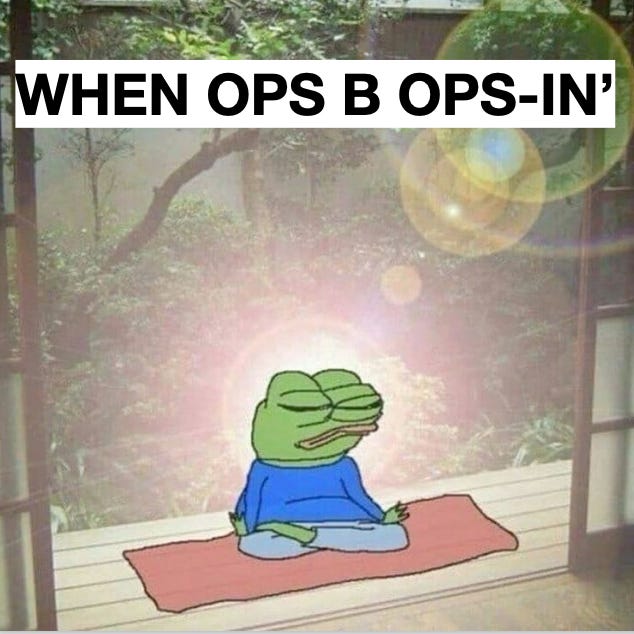
The ops person you were about to fire, of course!
Here’s my prediction. Within the next five years, the most in-demand person in any creative business will not just be the strategist. It will not just be the creative director. It will be the ops person.
The producer. The project manager. The account lead who understands not just what needs to happen but in what order, at what pace, with which people in the room. The person who holds the connective tissue of a relationship together so everyone else can focus on the work itself.
The ops person is often the easiest one to cut. And that's because when they're doing their job properly, you can’t feel them. The process runs. The timeline holds. The feedback arrives at the right moment from the right people. The ops person is invisible precisely because their job is to make everything else visible and functional.
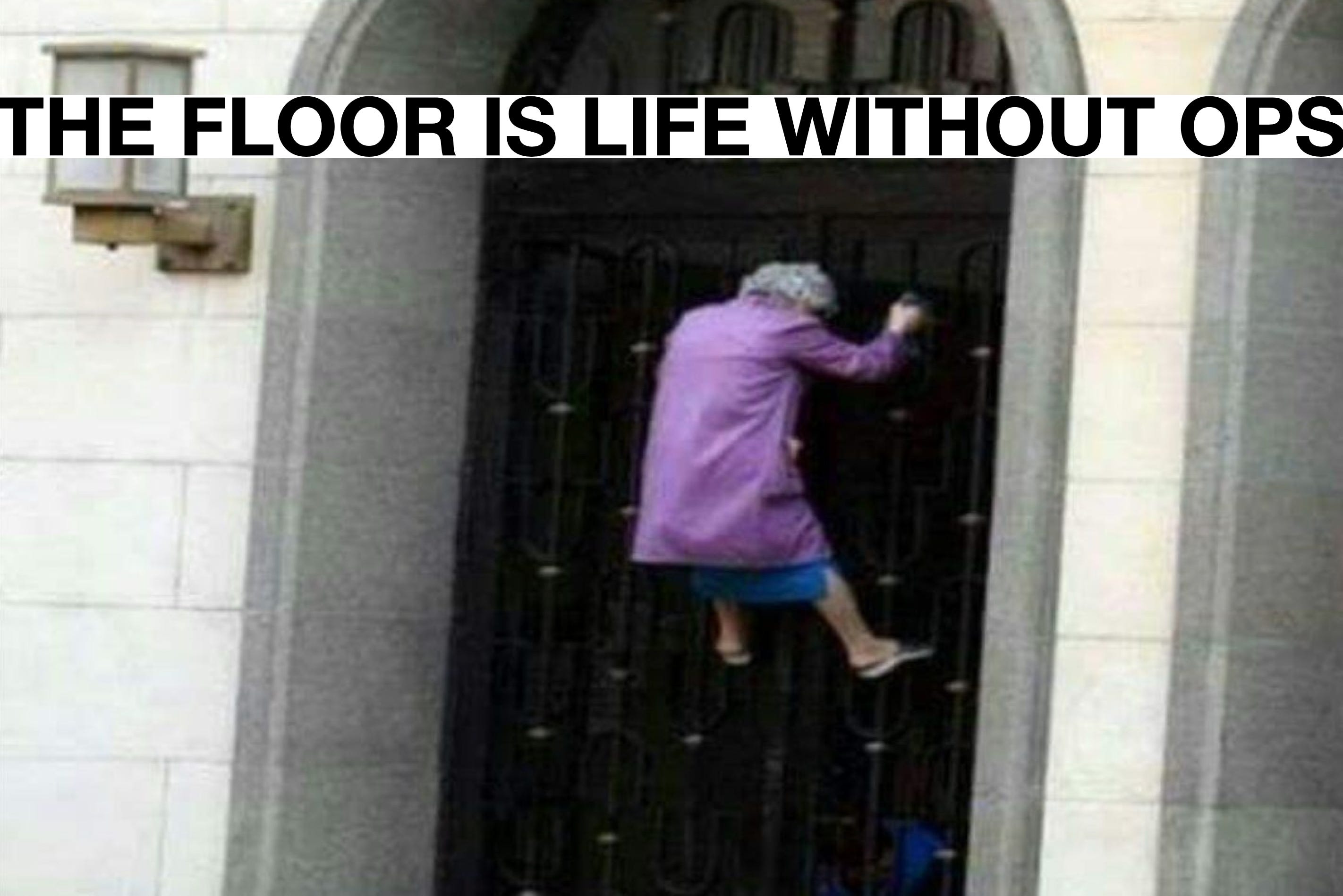
Then they leave. Or they get restructured out. And within six weeks the project is in a state that nobody can fully explain, because the thing holding it together was never the strategy or the creative. It was the architecture around them.
When the process fails it is rarely because the ideas were wrong. It is because nobody was managing the conditions in which the ideas were supposed to grow. The industry has spent years elevating strategy and creative to the top of the value chain. The ops function sits underneath, undervalued, doing the work that makes everything else possible.
That is going to change. The businesses that understand this first will move faster, retain better relationships, produce better work and win more clients. Not because they hired a better strategist. Because they finally gave the person running the infrastructure the status the job demands.
Which brings us to the question that has been sitting underneath everything in this series so far.
Frida Hedqvist is one of the contributors whose thinking has shaped the foundations of this research from the beginning. Across her responses, a single question appears that is not rhetorical and not yet answered: “How do we create more human connection and structure inside increasingly complex systems?”
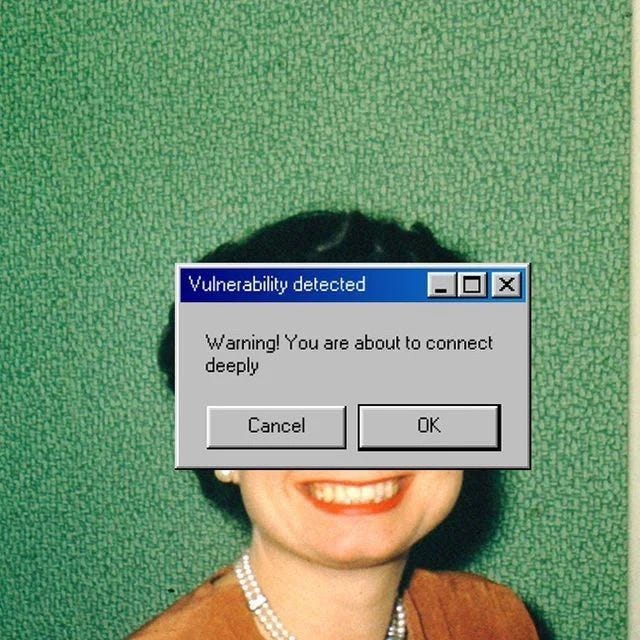
Here is the honest answer. You cannot systematise your way to human connection. Every layer of process you add is a small act of distrust in the people inside the system. Connection is not a feature you can install. It requires ongoing maintenance, like a garden, regular attention, the right conditions, and it cannot be automated.
The question was never how do we create more connection inside complexity. It’s how do we stop our systems from eating the connection that already exists? And how do we hold doors open for the creative vision to step through?
By remembering why the system exists in the first place.
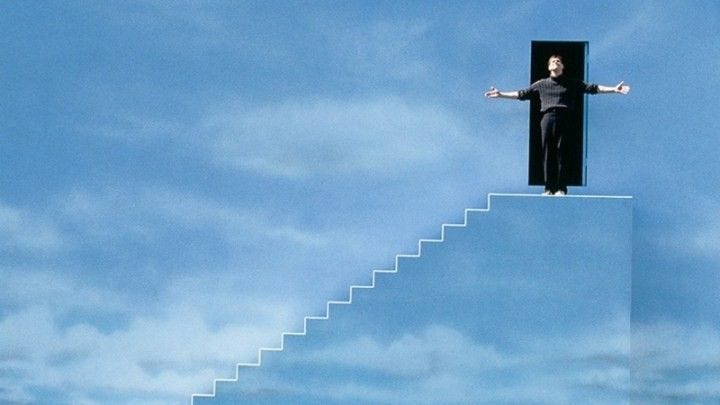
The founding principles of great creative work are not complicated. They are human. Our human-ness did not become less true because the tools changed. It became more important. The best creativity comes from the ability to sit in and move through the discomfort of human fallibility. To turn it into an advantage. Because the tools will keep changing. The humans in the room are the only constant (we hope).
That is not a romantic idea. It is a competitive advantage. And it only exists if you design your processes around connection and creativity over efficiency. Because creativity is what makes us human. And a human creative process is what makes human creativity possible.
So where best to start? Here are eight ways this article explores to guarantee a difficult relationship. See if you recognise any… I can (!):
1. The kickoff happened on a screen.
2. The process was fixed before anyone asked how the other side liked to work.
3. The pace was misread from the start - and nobody said so.
4. Nobody co-wrote the vision, so when the brief shifted, everything cracked.
5. The brief went into a black box and came back as an awful surprise.
6. Nobody checked in on the relationship along the way.
7. The person holding it all together got cut.
8. And when the work felt joyless and the team felt burnt out, everyone called it a workload problem.
Sound familiar? Here’s what to do instead.
If you’re the client:
Name your pace, your vision and your decision-makers upfront. Don’t make the agency reverse-engineer any of it.
Ask for rough thinking early. The performance of polish is costing you both time and truth.
If you’re hiring an agile agency for their agility, reward them with agile payment terms.
If you’re the agency:
Bring clients into your process early. Let them co-own an idea worth fighting for.
Build a framework that can hold ambiguity then check in, regularly. Not just on how the project is going, but how you are working together.
Protect the direction of your team. If untethered feedback is burning people out, name it. Re-align the vision.
And both: Co-write the process before you start the work, create a shared vision, and over-communicate. Make it human and creative. Not just efficient.
Which of the eight do you recognise? And what would it take to change it? Let us know in the comments.
A massive thanks to our contributors:
Frida Hedqvist (IKEA), Alex Tan (MOUTHWASH Studio), Nav Gill (Nike), Nikita Walia (U.N.N.A.M.E.D.), Joel Linkewer (AIRBNB), Isobel Farmiloe (DAZED), Thomas Kirkby-Jones (BREAKS), Mark Carroll (PINTEREST), Andy Harvey (COMMUNION), Mo White (REFY), Damola Oladapo (House Captain), Annie Masciavè (VINTED), Dani Coyle (Intersexy), Luke Li (IKEA), Liam S.Gleeson (HIDDEN and Hi-fi.london), Susie O’Brien (adidas), Lily Fletcher (Broadwick Studios), Lesley Winterbach (The GOODList), Paul Austin (Made Thought), Shanice Mears FRSA (The Elephant Room), Laura Conway (Creative Blood), Ana L, and Munise Can (Highsnobiety).
And a few who wanted to stay anonymous ;)
And special thanks to Lucinda Bounsall of Post-Culture by Sibling Studio – who the series was written in collaboration with.
Subscribe to LOOK-UP.WORLD™, By Morwenna
For 20 years, Morwenna has watched what separates creative businesses that take off from ones that plateau. LOOK-UP.WORLD™ is taking those insights public.
Brucks, M. & Levav, J. (2022). Virtual communication curbs creative idea generation. Nature, 605, 108-112.
Gallup. (2024). State of the Global Workplace Report. gallup.com/workplace
so accurate!!
The KO being virtual is terrible. And so true about creatives burnout, i always say that...
Painfully accurate. Half of creative burnout isn’t “too much work”, it’s too much work floating around with no direction, no owner and 14 people adding theirthoughts.